Learn Kitesurfing
Discover how to get started, the progression curve, and why private coaching is the key to success.
Is it hard to learn kitesurfing?
Contrary to popular belief, kitesurfing is not a strength sport. It is primarily a sport of finesse and technique. The power is managed by your harness, not your arms!
Anyone with a normal level of fitness who can swim can learn kitesurfing. Children can start as early as 10-12 years old (depending on weight), and there is no upper age limit as long as you are in good shape.
- No excessive strength required
- Accessible at all ages
- Fast progression with a good instructor
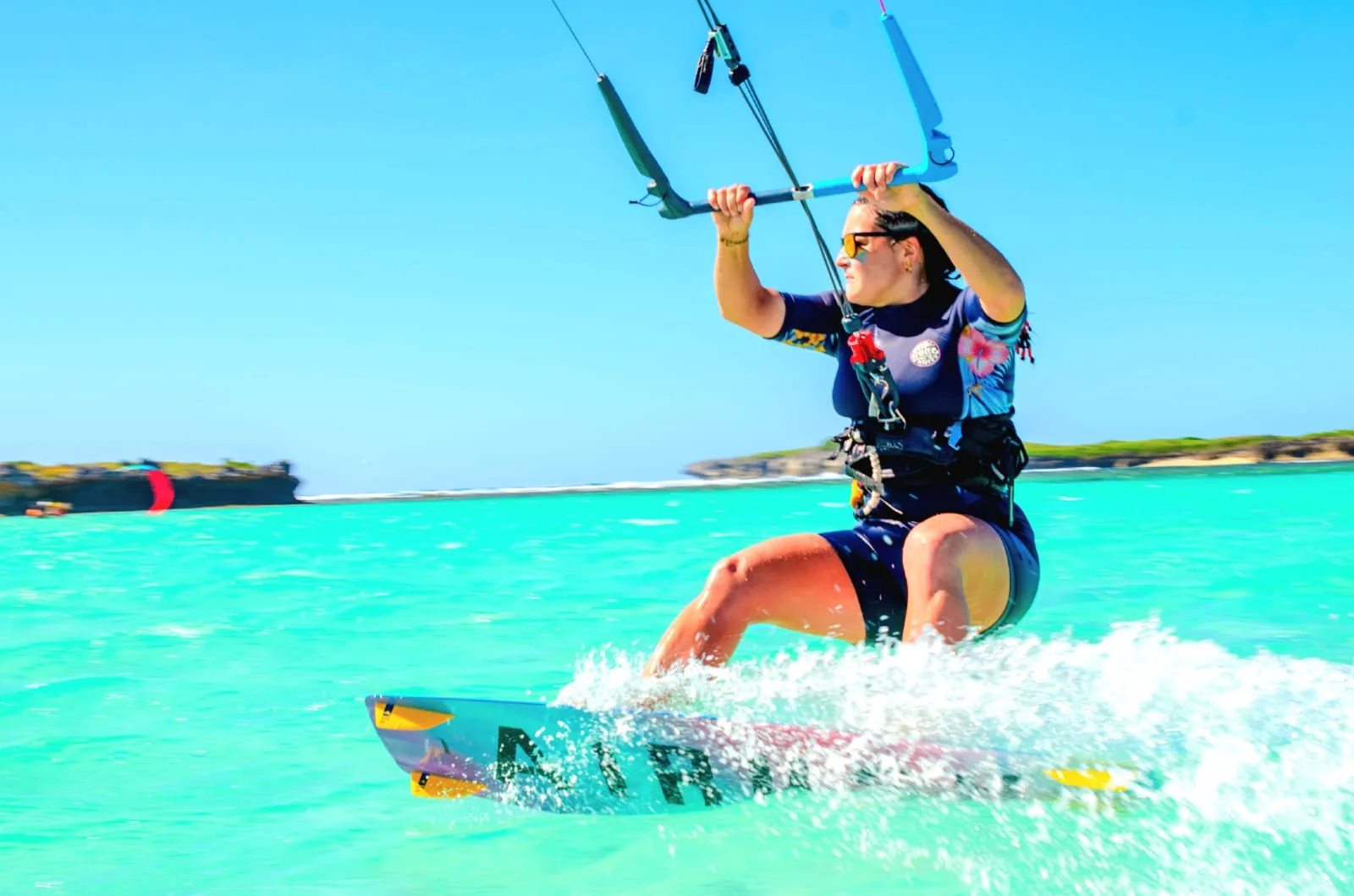
The 3 stages of learning
Kitesurfing is learned in stages. Here is what to expect during your first lessons.
Land-based Kite Control
It all starts on the sand (or in very shallow water). You learn wind theory, how to rig the gear, and above all how to fly a trainer kite. This is the crucial step to understanding how to generate power.
Bodydragging
Into the water, but without the board! You learn to let yourself be pulled by the kite in the water. This allows you to learn how to control the kite's power while being safe in the water. You will also learn to retrieve your lost board.
The Waterstart
The moment of truth. You put the board on in the water, send the kite into the power zone, and stand up to glide across the water. Once standing, all that's left is to learn how to ride upwind!
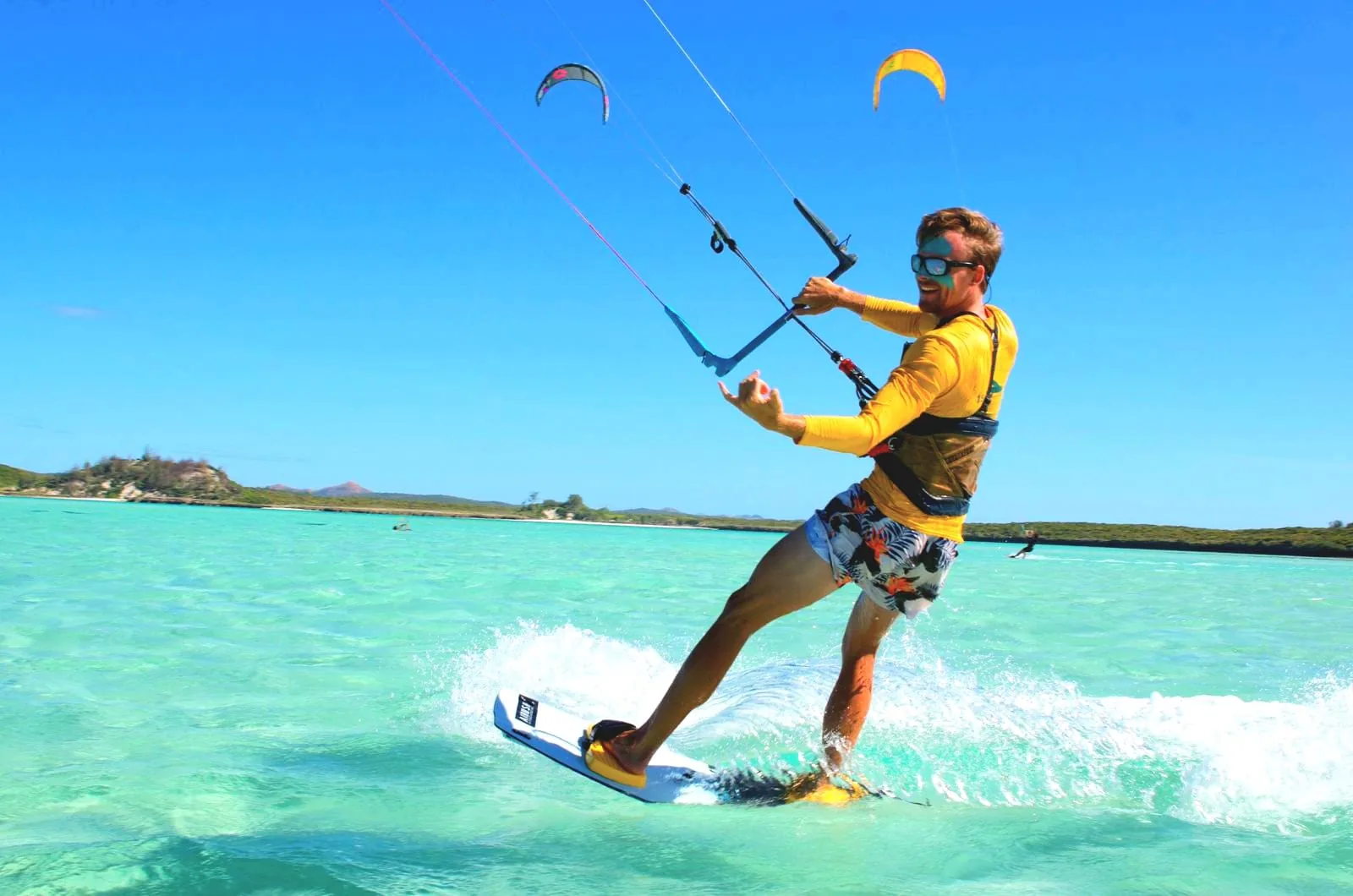
Why choose a Private Coach?
In a traditional school with groups of 4, you spend more time waiting your turn on the beach than flying the kite.
With private individual coaching, the coach is in the water with you 100% of the time. He corrects the slightest mistake in real time (often via a radio headset), which cuts the learning time in half. Plus, having a large flat lagoon with waist-deep water, like Sakalava Bay, is the ideal environment to avoid stressing about waves.
Discover our beginner lessonsDo you need any prerequisites to learn?
Knowing how to swim
It is the only true prerequisite. Being comfortable in the water (swimming 50 to 200 m) and in open water is reassuring in the first sessions. All the details in our "do you need to swim" guide.
Age and weight
Kitesurfing can be learned from childhood: allow 10 years old and about 35 kg to start safely, then no upper age limit as long as you are fit. See our age guide.
Equipment
No gear is needed to start: our lessons include kite, board, harness and flotation, matched to the wind of the day. Just turn up in sports clothes! Details on gear rental.
What happens during a beginner's stage?
A private coaching session at Sakalava usually goes like this: wind and gear theory on the beach, flying a small trainer kite, then a progressive water entry (body drag, waterstart) in the lagoon's shallow water. In 2 to 3 hours, most beginners get their first ride standing up.
How long does it take?
Allow 9 to 12 hours of lessons to become autonomous, often spread over a week with private coaching (the real time is detailed in our learning guide).
What budget?
Private coaching is €45-47/h, and 10-hour packs start at €445 with gear included. Check our lesson prices guide.
Self-taught learning?
Teaching yourself is risky and slower. If the idea appeals, first read the safety rules and our analysis of learning by yourself.
The steps of a typical progression
Here is the detailed journey of the first week, as we live it with our students at Sakalava.
Days 1-2: theory & flying
The 3-window safety rule, landing/relaunch, flying a trainer kite on land for 2 to 3 hours, then first duplication in the shallow water.
Days 3-4: bodydrag & board
Bodydrag on each side to learn how to go upwind, relaunching a kite from the water, then bodydrag with the board to tame the drag.
Days 5-7: waterstart & tacks
Starting position, first waterstart, first tacks across the wind. Most of our beginners go upwind within 7 to 9 sessions.
Also learn how to budget your lessons, and prepare your first kitesurf lesson.
How many sessions to become autonomous?
How many lessons before the first ride?
The first waterstart usually happens between the 6th and 9th session. Full autonomy (going upwind, riding both directions) takes on average 15 to 20 hours.
How long until you are autonomous?
In one intensive week at Sakalava (10 h of coaching spread over 5 days), most of our beginners hold their upwind tack without falling.
Can you learn without an instructor?
Risky: handling the kite close to the shore requires safety reflexes. Read our warning about learning solo first.
The equipment in our lessons
Kites & bars
A recent fleet matched to weight and level: from trainer kites for practice to 5-15 m² kites to ride the Varatraza from 15 to 35 knots.
Boards
From wide beginner boards with fins, easy in bodydrag, to freestyle-oriented boards for experienced riders. All included with the lessons.
Safety equipment
Helmet, impact vest, leash and whistle included in every session. Safety is our #1 priority, as in our safety rules.
Want to give it a try? Our kitesurf lessons in Madagascar include equipment rental. Book your session through our contact page.
Read next
How Long Does It Take to Learn?
9 to 12 hours on average to become independent: progression stages, from first flight to riding.
Is Kitesurfing Dangerous?
Real risks, safety rules and precautions. Modern quick-releases and the coach's role.
Kitesurf Travel Guide to Madagascar
Season, access, accommodation in Diego Suarez. The practical info before you leave.